How Many People Live in the UK? Population Breakdown for the Life in the UK Test
How many people live in the UK? According to the latest ONS (Office for National Statistics) mid-2024 estimate, the United Kingdom has a population of approximately 69.3 million people. That makes it the 22nd most populous country in the world and the third most populous in Europe after Germany and France.
If you're preparing for the Life in the UK Test, this is one of the most commonly tested topics. Questions about population, geography, and the structure of the United Kingdom come up regularly. This guide gives you all the key facts you need to know.
69.3M
Total UK Population
4
Countries in the UK
84%
Live in England
243,610
km² Total Area
1. UK Population at a Glance
The population of the UK reached an estimated 69,281,400 in mid-2024 — a growth of 755,300 people (1.1%) from the previous year. This represents the second-largest annual numerical increase for over 75 years, largely driven by international migration.
The UK population has grown steadily over the past century. For context, the population was approximately 38 million in 1901, 50 million in 1950, and crossed the 60 million mark around 2005. The growth rate has accelerated in recent decades due to higher net migration and increased life expectancy.
2. Population by Country
The United Kingdom is made up of four countries. Here's how the population breaks down:
| Country | Population (est.) | % of UK | Capital |
|---|---|---|---|
| England | 57.9 million | 84% | London |
| Scotland | 5.5 million | 8% | Edinburgh |
| Wales | 3.2 million | 5% | Cardiff |
| Northern Ireland | 1.9 million | 3% | Belfast |
| United Kingdom | 69.3 million | 100% | London |
How many people live in England? With roughly 57.9 million residents, England is home to the vast majority of the UK's population. London alone accounts for approximately 9 million people, making it one of the largest cities in Europe.
Life in the UK Test Tip
You should know the four countries of the UK and their capitals. A common question asks which is the most populous country in the UK (England) and which city is the capital of the UK (London). You don't need to memorise exact population numbers, but knowing the approximate proportions helps.
3. Is England a Country? Understanding the UK Structure
One of the most frequently searched questions is: is England a country? The answer is yes — but it's complicated.
England is a country, but it is not a sovereign state. It is one of four countries that together form the United Kingdom of Great Britain and Northern Ireland — commonly known as the UK. The UK is the sovereign state recognised in international law.
Here's the important distinction that comes up on the British citizenship test:
- England — a country within the UK (no separate parliament, governed from Westminster)
- Scotland — a country within the UK (has its own parliament in Edinburgh)
- Wales — a country within the UK (has its own parliament/Senedd in Cardiff)
- Northern Ireland — a country within the UK (has its own assembly in Belfast)
UK vs Great Britain vs British Isles
These terms are often confused, and the Life in the UK Test may test your understanding of the difference:
- United Kingdom (UK) — England + Scotland + Wales + Northern Ireland
- Great Britain — England + Scotland + Wales (the island, excluding Northern Ireland)
- British Isles — a geographical term for all islands including the UK and the Republic of Ireland
Life in the UK Test Tip
Is Northern Ireland part of Great Britain? No. Northern Ireland is part of the United Kingdom but NOT part of Great Britain. Great Britain is the island containing England, Scotland, and Wales only. This is a commonly tested distinction.
4. How Big Is the UK?
How big is the UK? The United Kingdom covers a total area of approximately 243,610 square kilometres (94,058 square miles). That makes it roughly the same size as Oregon in the United States, or slightly smaller than New Zealand.
| Country | Area (km²) | Population Density |
|---|---|---|
| England | 130,279 | ~445 per km² |
| Scotland | 77,933 | ~70 per km² |
| Wales | 20,779 | ~154 per km² |
| Northern Ireland | 14,130 | ~137 per km² |
| United Kingdom | 243,610 | ~284 per km² |
How big is England? England is the largest country in the UK by population but only the second largest by area. Scotland is actually bigger geographically (77,933 km² vs 130,279 km²) — wait, that's not right. England is 130,279 km² and Scotland is 77,933 km², so England is larger by area too. However, Scotland is far less densely populated, with most of its land being rural highlands.
5. How the UK Population Has Changed
The UK population has grown significantly over the past century. Here are key milestones:
- 1901: ~38 million
- 1951: ~50 million
- 2001: ~59 million
- 2011: ~63 million (Census)
- 2021: ~67 million (Census)
- 2024: ~69.3 million (ONS estimate)
Population growth in the UK is driven by two main factors: natural change (births minus deaths) and net international migration. In recent years, net migration has become the larger factor, with the UK seeing significant increases in migration from outside Europe.
The mid-2024 estimate showed England's population growing fastest (1.2%), followed by Scotland (0.7%), Wales (0.6%), and Northern Ireland (0.4%).
6. Largest Cities in the UK
The UK is a highly urbanised country, with most of the population living in cities and towns. Here are the largest urban areas:
- London — approximately 9 million (Greater London)
- Birmingham — approximately 1.1 million
- Leeds — approximately 800,000
- Glasgow — approximately 630,000
- Sheffield — approximately 580,000
- Manchester — approximately 550,000
- Edinburgh — approximately 530,000
- Liverpool — approximately 500,000
- Bristol — approximately 470,000
- Cardiff — approximately 360,000
London is by far the largest and serves as the capital of both England and the United Kingdom. It's the seat of the UK Parliament, the monarchy, and most government departments.
7. Key Demographics for the Life in the UK Test
Beyond raw population numbers, the Life in the UK Test covers broader demographic topics. Here are the key facts:
Ethnic Diversity
The UK is one of the most ethnically diverse countries in Europe. According to the 2021 Census, approximately 81.7% of people in England and Wales identified as White, while 18.3% identified as belonging to ethnic minority groups — the most common being Asian or Asian British (9.3%), Black or Black British (4%), and Mixed or Multiple ethnic groups (2.9%).
Religion
Christianity remains the most common religion in the UK, though its share has been declining. The 2021 Census showed that 46.2% of people in England and Wales identified as Christian, 37.2% said they had no religion, and 6.5% identified as Muslim — making Islam the second largest religion.
Languages
English is the official language of the UK and the main language spoken by the vast majority of the population. Welsh is also an official language in Wales, and there are smaller communities speaking Scots Gaelic, Irish, and Cornish.
Ageing Population
The UK has an ageing population, with a median age of around 40 years. The proportion of people aged 65 and over has been increasing steadily, which has implications for the NHS, pension systems, and social care.
Life in the UK Test Tip
The test may ask about the UK's ethnic and religious diversity, the official language, and the structure of the population. You don't need exact percentages, but you should know that the UK is an ethnically diverse society and that Christianity is the main religion.
Test Your Knowledge of UK Population Facts
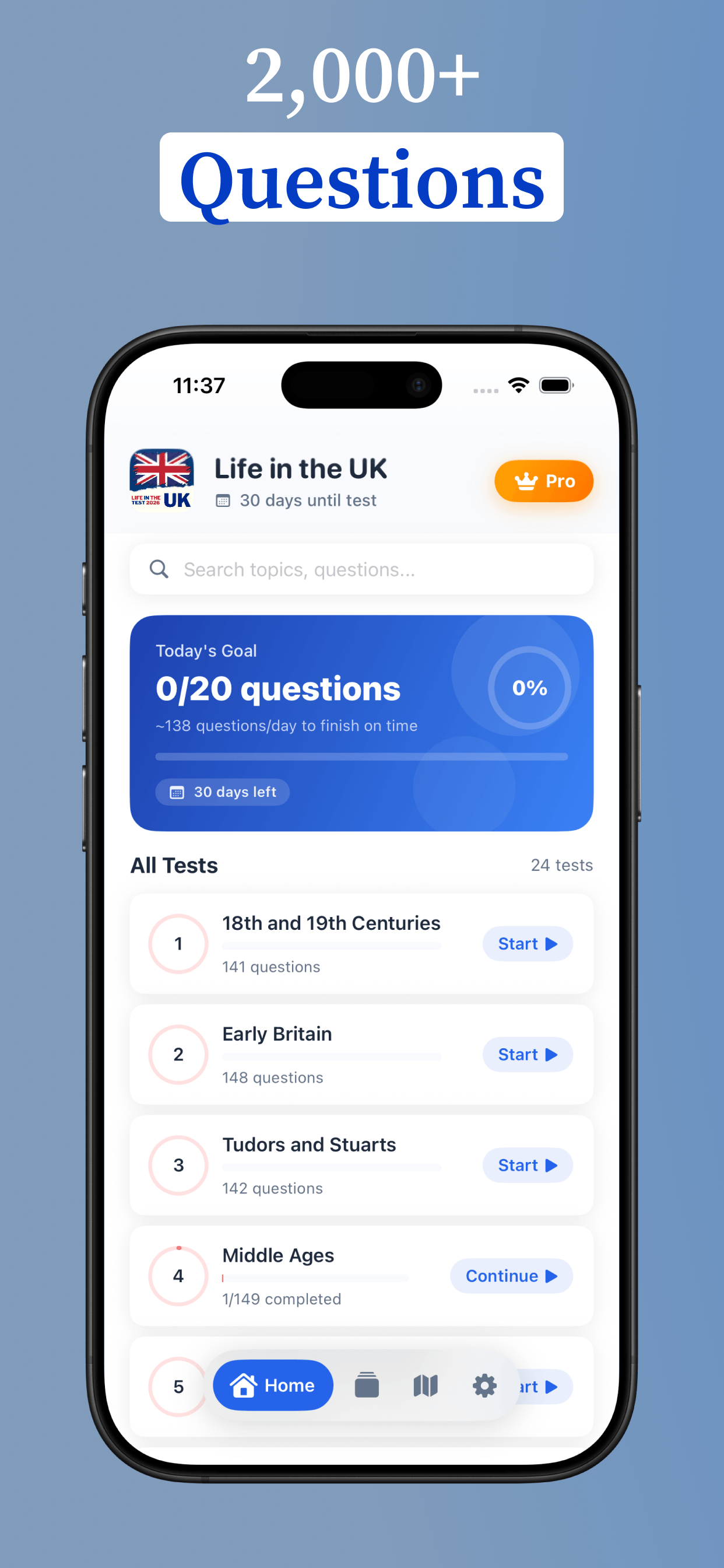
The LifeUK app includes 2,000+ practice questions covering population, geography, history, and everything else on the Life in the UK Test. Start practising for free today.
Get the LifeUK App8. Why This Matters for the Life in the UK Test
Population and geography questions appear regularly on the Life in the UK Test. Based on our analysis of common test questions, here are the facts most likely to be tested:
- The UK population is approximately 69 million (you should know it's "about 67-70 million")
- England is the most populous country in the UK by far
- The UK is made up of four countries — England, Scotland, Wales, and Northern Ireland
- London is the capital of the UK and the largest city
- Great Britain and the UK are different things — Northern Ireland is in the UK but not Great Britain
- Scotland, Wales, and Northern Ireland have their own devolved parliaments/assemblies
- The UK is ethnically and religiously diverse with Christianity as the main religion
These topics fall under the "everyday life" and "values and principles" sections of the test. For a comprehensive preparation guide, read our article on how to pass the Life in the UK Test.
9. Frequently Asked Questions
How many people live in the UK?
The UK population is approximately 69.3 million as of the ONS mid-2024 estimate. This includes all four countries: England (~57.9 million), Scotland (~5.5 million), Wales (~3.2 million), and Northern Ireland (~1.9 million).
How many people live in England?
England has a population of approximately 57.9 million people, making it the most populous country in the UK. England accounts for roughly 84% of the total UK population.
Is England a country?
Yes, England is a country, but it is not a sovereign state. England is one of four countries that make up the United Kingdom. The UK is the sovereign state recognised in international law.
Is the UK a country?
The United Kingdom is a sovereign state made up of four countries: England, Scotland, Wales, and Northern Ireland. It is recognised as a single entity in international law and holds a seat at the United Nations.
How many countries are in the UK?
There are four countries in the UK: England, Scotland, Wales, and Northern Ireland. Together they form the United Kingdom of Great Britain and Northern Ireland.
What is the population of Scotland?
Scotland has a population of approximately 5.5 million people. Despite being the second largest country in the UK by area, it is much less densely populated than England.
Is Northern Ireland part of Great Britain?
No. Northern Ireland is part of the United Kingdom but NOT part of Great Britain. Great Britain is the island containing England, Scotland, and Wales only.
Is Scotland part of the UK?
Yes. Scotland is one of the four countries that make up the United Kingdom. It has its own devolved parliament in Edinburgh that has powers over education, health, and other areas.
How big is the UK?
The UK covers approximately 243,610 square kilometres (94,058 square miles). England is the largest country by area and population, followed by Scotland, Wales, and Northern Ireland.
See the LifeUK App in Action
Clean, focused, and designed to help you pass. Here's what you'll be studying with.